


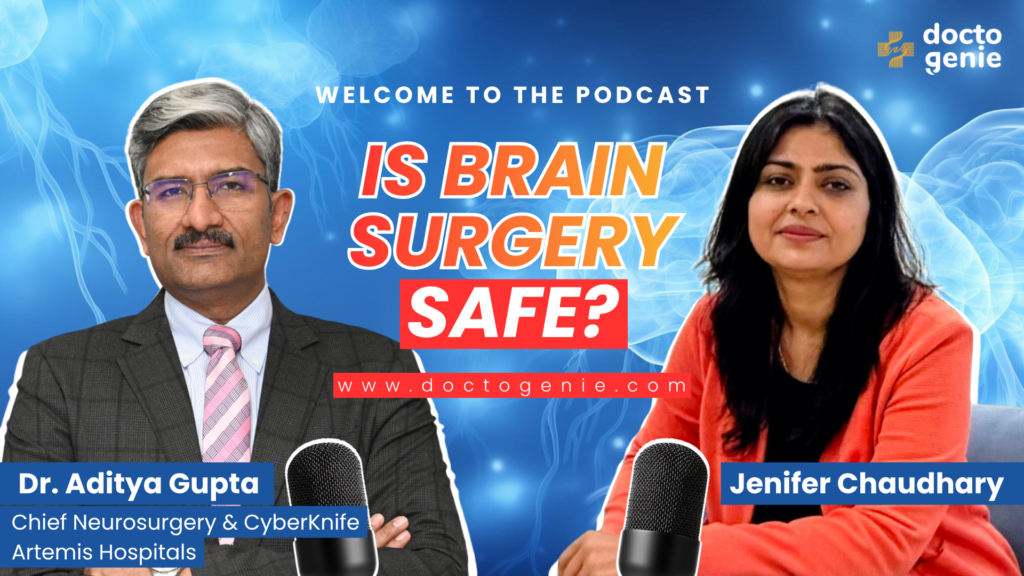
An Exclusive Interview with Dr. Aditya Gupta
Dr. Aditya Gupta:
The answer depends entirely on the condition being treated. Some neurological disorders are stable and do not worsen over time, giving patients the flexibility to take time before deciding. For example, in trigeminal neuralgia, surgery carries a low risk—around 1%—and delaying treatment mainly means living with pain for a longer period.
However, the situation is very different for conditions like rapidly growing brain tumors. If a tumor is located near critical areas of the brain and has already started causing weakness or other neurological symptoms, delaying surgery can lead to permanent damage. In such cases, timely treatment is essential.
“In most situations, the risk of treatment is far less than the risk of carrying the disease.”
Dr. Aditya Gupta:
Neurosurgery is generally recommended for structural conditions affecting the brain. Common examples include:
Today, some neurological disorders that were previously treated only with medication can also benefit from surgery. These include:
For small brain tumors, surgery may not even be necessary, as they can often be treated using CyberKnife radiosurgery, a completely non-invasive treatment option.
Dr. Aditya Gupta:
Not every neurological condition requires an operation. Diseases caused by inflammation or infection are often managed medically.
Examples include:
The key difference is whether the problem is structural (requiring surgery) or medical (requiring medicines).
Dr. Aditya Gupta:
Technology has dramatically improved neurosurgery. One of the biggest advances is CyberKnife radiosurgery, which allows doctors to treat selected small brain tumors without making any incision.
The treatment is:
This technology has expanded treatment options for many patients who previously required conventional surgery.
Dr. Aditya Gupta:
Patient safety begins well before entering the operating room.
Every patient undergoes:
Inside the operating room, internationally accepted safety protocols are followed, including:
In addition, every neurological condition has its own disease-specific treatment protocol to ensure the safest possible care.
Dr. Aditya Gupta:
Patients should expect some temporary discomfort after surgery.
Normal postoperative symptoms include:
These symptoms are generally mild and usually improve within a few hours to one day.
Dr. Aditya Gupta:
Certain symptoms should never be ignored.
Doctors become concerned if a patient develops:
To ensure patient safety, routine CT scans are performed after surgery to detect swelling or bleeding before these problems become serious.
Dr. Aditya Gupta:
Absolutely.
India today offers:
One of India’s biggest advantages is accessibility. While patients in many Western countries may wait several weeks just to see a neurosurgeon, patients in India often receive expert consultation and treatment much sooner.
Combined with lower treatment costs and world-class infrastructure, India has become a preferred destination for international patients seeking neurosurgical care.
Dr. Aditya Gupta:
Recovery is often much faster than people imagine.
A typical timeline includes:
If no additional treatment is required, many international patients can safely return home within approximately two weeks of arriving in India.
Dr. Aditya Gupta:
CyberKnife treatment is even quicker.
The process usually involves:
Many international patients complete the entire process and travel back to their home country within five days.
Dr. Aditya Gupta:
Modern neurosurgery has advanced tremendously over the past decade.
When patients choose an experienced team equipped with advanced technology and strong multidisciplinary support, the overall surgical risk is extremely low—around 1% in many routine cases.
Patients should avoid making decisions based solely on isolated negative experiences shared by others. Every case is unique, and modern neurosurgery has become significantly safer and more precise than many people realize.
Continuing the Conversation with Dr. Aditya Gupta
Dr. Aditya Gupta:
Patient safety is the foundation of every neurosurgical procedure. Long before entering the operating room, every patient undergoes a detailed assessment to ensure they are fit for surgery.
Our safety measures include:
Inside the operating room, internationally accepted surgical safety checklists are followed to verify:
Each neurological condition also follows its own disease-specific protocol to maximize safety and improve outcomes.
Dr. Aditya Gupta:
Yes. Elective surgeries allow enough time to complete every safety protocol in detail. However, emergencies are different.
When a patient has life-threatening brain swelling, bleeding, or severe trauma, saving the patient’s life becomes the immediate priority. In such situations, surgery cannot be delayed simply to complete every routine protocol.
The goal is to intervene quickly while maintaining the highest possible standards of care.
Dr. Aditya Gupta:
Many patients are surprised to learn that mild discomfort after brain surgery is completely expected.
Common postoperative symptoms include:
Patients undergoing pituitary surgery through the nose may also experience nasal blockage for a couple of days because of surgical dressing.
Fortunately, these symptoms are generally mild and improve within the first 24 hours.
Dr. Aditya Gupta:
Certain symptoms require urgent evaluation, including:
To detect complications early, routine CT scans are performed after surgery—even if the patient appears well. This proactive approach helps identify swelling or bleeding before symptoms become serious.
Dr. Aditya Gupta:
Absolutely.
Over the last decade, India has made remarkable progress in neurosurgery.
Today, leading hospitals offer:
One major advantage is accessibility. While patients in many developed countries may wait several weeks just to see a neurosurgeon, patients in India often receive specialist consultation and treatment much sooner.
Combined with significantly lower treatment costs, this has made India a preferred destination for patients from around the world.
Dr. Aditya Gupta:
Recovery is often much quicker than people expect.
A typical timeline is:
Before surgery
Hospital stay
Sutures are generally removed around Day 8 or 9.
If no chemotherapy or radiation is required, many international patients can safely return home within two weeks of arriving in India.
Dr. Aditya Gupta:
CyberKnife treatment is even faster.
For patients with suitable small brain tumors:
Most international patients can complete the entire process and travel back home within five days.
Dr. Aditya Gupta:
Modern neurosurgery has advanced tremendously.
When patients seek treatment at experienced centres with skilled surgeons, advanced technology and strong teamwork, the overall surgical risk is very low—around 1% in many routine procedures.
Unfortunately, people often hear only about the rare complications, while thousands of successful surgeries go unnoticed.
Patients should base their decisions on medical evidence and expert guidance rather than fear.
Dr. Aditya Gupta:
This is one of the biggest misconceptions.
Brain surgery today is not simply about removing disease—it is about saving lives and improving quality of life.
Patients are often walking, talking with family members and eating normally within days after surgery.
The perception that every brain surgery is extremely dangerous is outdated.
Dr. Aditya Gupta:
A brain tumor does not automatically mean cancer.
A tumor simply means an abnormal growth, which may be benign or malignant.
In fact, the majority of brain tumors treated today are non-cancerous, highly treatable and compatible with a normal, healthy life after treatment.
Modern neurosurgery has evolved into one of the safest and most technologically advanced specialties in medicine. With improved imaging, minimally invasive techniques, strict safety protocols and experienced multidisciplinary teams, patients today have better outcomes than ever before.
As Dr. Aditya Gupta emphasizes, informed decisions, early treatment and expert care are the keys to overcoming fear and achieving the best possible results for patients facing brain surgery.
By submitting the form I agree to the Terms of Use and Privacy Policy of Docto Genie.